
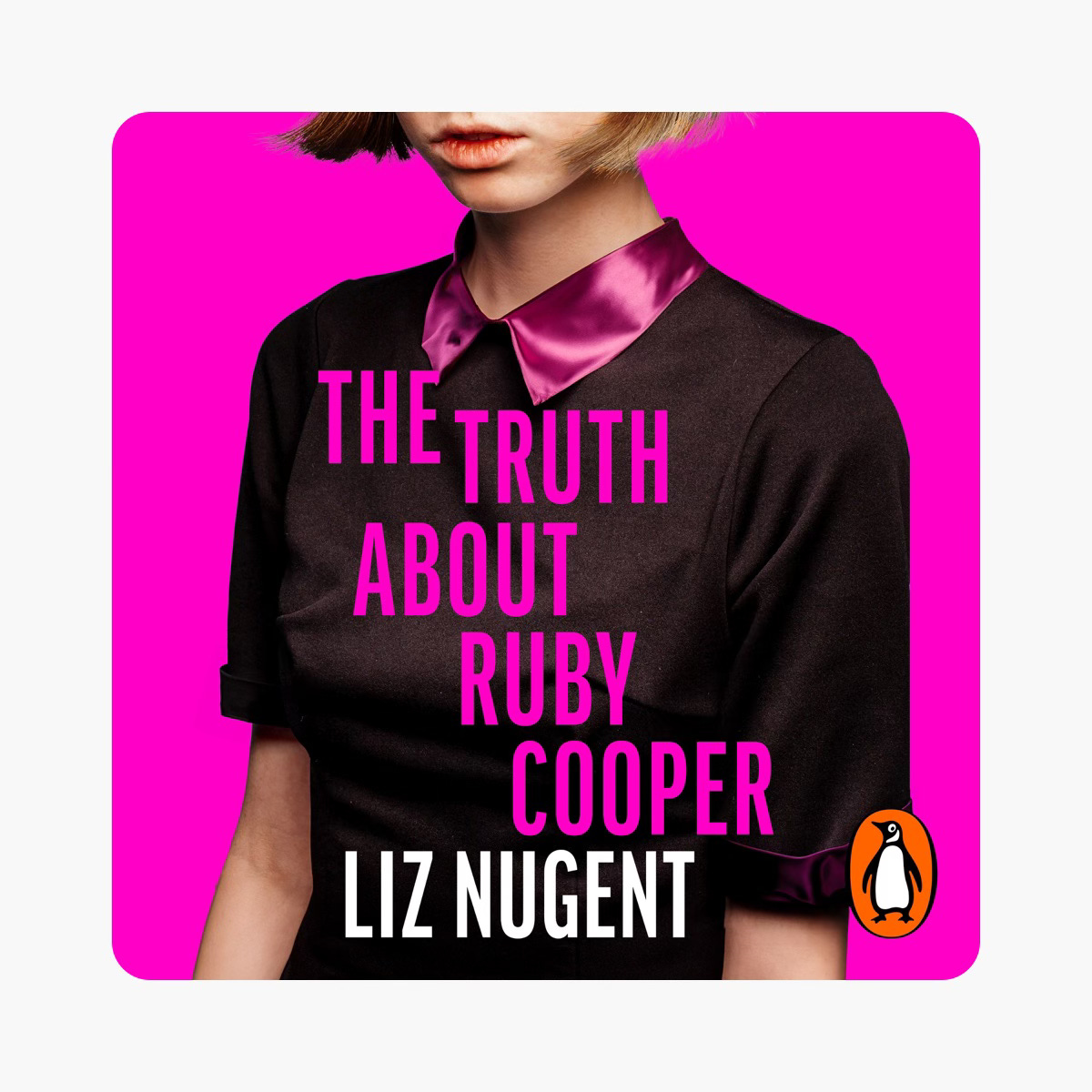
The Truth About Ruby Cooper by Liz Nugent: Book Review
A masterclass in subverting empathy, addiction, and the standard plot twist.


What is worse: the act or the lie? Or telling a lie that turns the truth into a secret The Truth About Ruby Cooper is about lies, secrets and the Pandora’s box of pain that is released with the untruth and powered by secrecy.
The story starts in suburban Boston at the family home of well-off middle-class family. The father is a successful pastor and investment broker, the mother, an Irish woman and homemaker, and the two daughters, Erin, the pretty academic and Ruby the brooding, jealous younger sister.
“Everyone talked about how pretty Erin was, and then, when they noticed me, they’d hastily say something like ‘and Ruby’s freckles are so cute.”
As Bebe sings in ‘At The Ballet’ from A Chorus Line:
"Different" is nice, but it sure isn't pretty.
"Pretty" is what it's about.
I never met anyone who was "different"
Who couldn't figure that out.”
In Bebe’s case she finds the beauty she is searching through for in ballet where ‘every Prince has got to have his Swan.’ Ruby Cooper, on the other hand, takes a different course. She drills a hole in her bedroom wall and watches her older sister give her working class boyfriend, Milo, handjobs. Like a darker, more menacing version of the Pulp song Babies, but instead of spying on a sister’s friend, Ruby is spying on her sister. Her jealousy, we realise, has taken her into strange and unsettling territory.
This envy mutates into a desire to hurt, into a scream for attention and ‘The Incident’ on which the book turns. The brutality and callousness of what Ruby manufactures is shocking if viewed in isolation. However, Liz Nugent writes her characters so well that the reader finds themself realising the absolute logic to the character herself of her behaviour. She has given us the clues, dropped the breadcrumbs and left the door ajar.
This is also brave territory for the writer to explore. It is difficult to discuss without giving away the plot but Nugent is unafraid to ask a big question about a woman who has set out to lie about a crime and manipulate the situation to such an extent that it destroys her family and several other lives.
We are thrust into a spinning, upside down world of class and gender experiences of the legal system. Who should be believed and why? We know the legal system favours the wealthy and so does Ruby.
She is a magnetically terrible person. Her choices would send anyone else’s moral compass spinning but somewhere in that dark soul, we want to believe that she can be saved. After she descends into addiction, her family pack Ruby off to an expensive rehab clinic where she is a disruptive and entitled prick. But she’s an addict and she should feel sympathy for her - right?
Nugent takes us on a different path. The one that a lesser writer would avoid. There is a terrible thought that bubbles in our own minds, almost as if by spending time with this nasty woman we have, by osmosis, taken on some of her characteristics. What, we ask, if Ruby’s descent into addiction was not a cry for help but a choice: did Ruby Cooper choose the path to addiction as the ultimate deflection of her own behaviour? The behaviour she cannot own up to.
We know intellectually that addiction is an illness and there but for the Grace of God go we. But don’t we have that tiny shrill voice, tinny and always shouting, somewhere in our heads that rants and raves about addicts making a choice. “ I never became a heroin addict did I?” it harangues, “I never drink myself to black out - you don’t need to keep drinking, do you?” Is Nugent making us want something bad or worse to happen to Ruby. Wouldn’t everyone be happier if Ruby and her semi-psycopathic lying was out of their lives?
But the good part of our souls, the liberal and caring part hopes that she will find redemption. She will follow the 12 steps, she will make peace with her demons and become a transformed woman.
The Truth About Ruby Cooper is an excellent book that does so much more than a standard thriller. It goes to horrible places without accepting any received wisdom and forces us to think critically about situations about which we already have firm opinions. The plot unravels back and forth across a quarter of a century gathering energy each time a lie is revealed and finally there is healing. Fractures are gently and carefully fused, characters are able to accept themselves and forgiveness pops through the dark earth like a plant in Spring sunshine.
And then, like all great Liz Nugent novels, right at the end a twist drops the bottom out of your stomach and we wonder if it is all a lie.
Have you read The Truth About Ruby Cooper? How does it compare to other thrillers or other books by Liz Nugent. Let me know in the comments.
I purchased this book at the wonderfully independent Bantry Bookshop

We do indeed. To me it's like the obsession with stuff that's 'dark.' Imo, the world's dark enough already, especially with the moron Trump in it.
No, and I don't really want to. The idea behind the book doesn't appeal to me at all.